Foundation and Early Development
The University of Shanghai was established in 1906 as Shanghai Baptist College, supported by Northern and Southern Baptists of America. Its campus, along the Whangpoo River about six miles east of the center of Shanghai, was ready for occupation in 1909 with the completion of the main administrative and classroom building, Yates Hall. By 1918 the University had added more than twenty acres of land to its campus and five new buildings. It was was a pioneer in coeducation in China, opening its doors to women in 1920.
Social Outreach
The Yangtszepoo Social Center, the first institution of its kind in China, was established in 1913. It was located three miles from the University in the center of the mill district of Shanghai. Its program of social, educational, recreational, and religious activities for the people of that area served more than a thousand people per day.
War and Tragedy
The Sino-Japanese War brought major disruption to the University of Shanghai. The campus lay between the sea and the city, directly in line of the Japanese invasion of August 1937. Students and faculty took refuge in the basement of the science building during the initial attack, then made their way to the University's Downtown School of Commerce, where classes continued despite daily bombing of the city. Throughout the course of the war, the University occupied several buildings within Shanghai's International Settlement and shared the library and laboratory facilities of St. John's University. On April 8, 1938, University president Herman C. E. Liu was assassinated by the Japanese. For the duration of the war the University operated two programs, the Shanghai Institute in Shanghai, and the School of Commerce in Chungking.
Post-War Reconstruction and Optimism
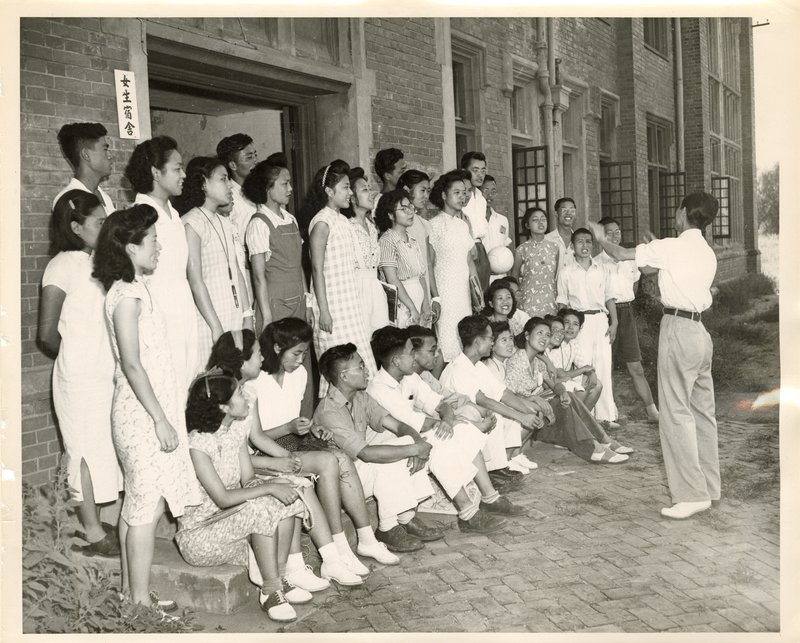
Much rehabilitation of the University of Shanghai campus was required before it could be occupied again in April 1946, eight and a half years after its evacuation. Several new buildings were constructed during the next two years, including a women's dormitory. The University's newspaper, the Shanghai Spectator, for February 8, 1949 recounts the reaction of students moving into the new dormitory space:
The Shanghai Spectator also records the post-war optimism of the student body, which was organizing a tree-planting movement on the campus:
This dream did not come to fruition for the University of Shanghai. Operations continued as normally as possible for the University following the Communist occupation of Shanghai in May 1949, but by 1952 the campus was taken over by the People's Government and the era of Christian higher education in Shanghai had passed.